Summary:
- The most common source of a boiler leak is the pressure relief valve, usually because system pressure is too high.
- High pressure often comes from a waterlogged expansion tank or a fill valve letting in too much water.
- Leaks from fittings, pumps or valves are often repairable; a leaking heat exchanger usually means replacement.
- Never cap or plug a relief valve. It protects your system from dangerous pressure.
- Turn the boiler off, catch the water, note the pressure reading and call a licensed plumber.
Why Is My Boiler Leaking Water?
A boiler usually leaks for one of five reasons: high pressure forcing water out of the relief valve, a worn relief valve, loose or corroded fittings, a failing pump seal or valve, or a corroded heat exchanger. On condensing boilers, a blocked or disconnected condensate line can also look like a leak.
| Where the water appears | Likely cause | Usually |
|---|---|---|
| Pipe coming off the side of the boiler (relief valve discharge) | Pressure too high, or a worn relief valve | Repairable |
| Joints and fittings on the piping | Loose or corroded connections | Repairable |
| Around the circulator pump or zone valves | Worn seals or gaskets | Repairable |
| Small plastic line to a floor drain or pump (condensing boilers) | Blocked or disconnected condensate line | Repairable |
| Under the boiler, from inside the cabinet | Corroded or cracked heat exchanger | Often means replacement |
Boiler Pressure Relief Valve Leaking: What It Means
A boiler pressure relief valve leaking is usually doing its job. On most residential hot-water boilers, the valve opens at 30 psi to release water before pressure becomes dangerous. If it’s dripping or discharging, either system pressure is too high or the valve itself has worn out and no longer seals.
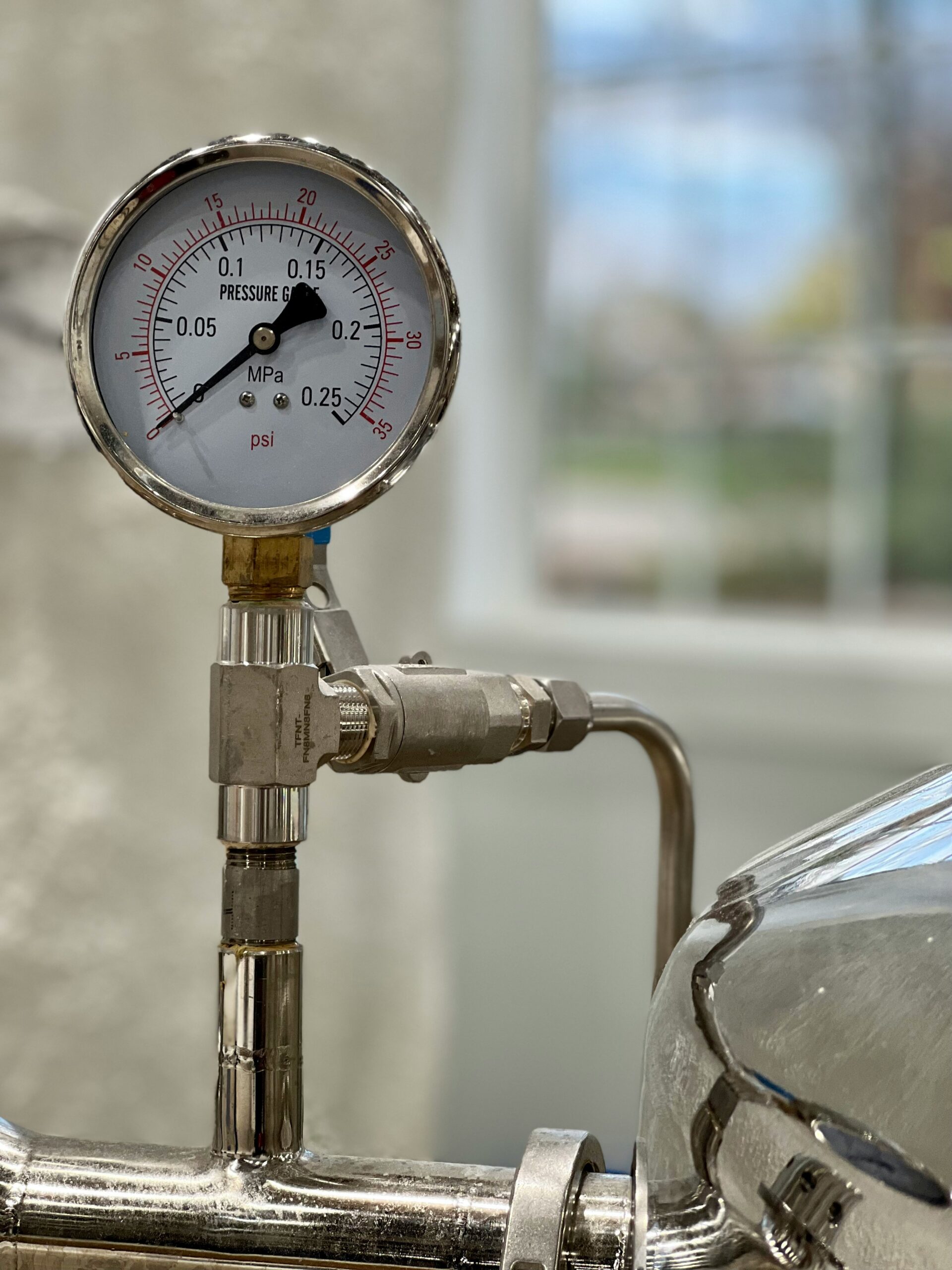
Check the pressure gauge. If it reads near 30 psi when the boiler is hot, the valve is reacting to high pressure, and the real problem is elsewhere in the system. If the gauge reads normal and the valve still drips, the valve may be worn or have debris on its seat and should be replaced.
Routine maintenance includes testing this valve. The U.S. Department of Energy lists testing the pressure-relief valve among the basic maintenance steps for hot-water systems.
Important: Never cap, plug or remove a relief valve to stop the dripping. Doing that removes the safety protection against excess pressure.
What Causes Boiler Pressure Too High?
Boiler pressure too high is most often caused by a failed expansion tank or a faulty fill (pressure-reducing) valve. Water expands as it heats, and the expansion tank absorbs that extra volume. When the tank loses its air charge or the fill valve lets in too much water, pressure spikes every time the boiler fires.
Waterlogged expansion tank
Expansion tanks have an air cushion on one side of a rubber diaphragm. Over time the air charge leaks out or the diaphragm fails, and the tank fills with water. A sign of this is pressure that rises quickly as the boiler heats up and drops back when it cools.
Faulty fill valve
The fill valve keeps the system topped up at a set pressure. If it sticks open or its setting drifts, it can overfill the system, so pressure stays high even when the boiler is cold.
Pressure too low after a leak
The opposite can happen too. If water has been escaping for a while, pressure may drop, and the boiler may shut down or leave upstairs rooms cold. Our boiler troubleshooting guide explains normal pressure ranges and other checks.
What to Do When Your Boiler Is Leaking
Turn the boiler off at its service switch, contain the water, and take a quick note of the pressure reading and where the leak is coming from. Then call a licensed plumber. Acting quickly protects your floors and stored belongings and helps prevent a small leak from turning into water damage.
- Turn off the boiler using its service switch or breaker.
- Close the cold-water feed valve to the boiler if you can locate it easily.
- Catch the water with a bucket or towels, and move anything stored nearby.
- Photograph the pressure gauge and the leak location.
- Don’t open the cabinet or tighten fittings on the gas line. Leave those to a professional.
- Call for service and describe what you saw.
If you smell gas at any point, leave the house and call your gas utility or 911 from outside.
Can a Leaking Boiler Be Repaired?
Most boiler leaks can be repaired, including relief valves, expansion tanks, fill valves, pump seals and fittings. A leaking heat exchanger is different. Repairs are often not practical, so replacement is usually the better investment, especially on an older boiler.
If your boiler is older and leaking from the heat exchanger, it may be time to consider boiler replacement with a high-efficiency model.
Frequently Asked Questions
Is a leaking boiler dangerous?
A small leak isn’t usually an immediate danger, but it can damage floors, cause mold and lead to pressure problems that shut the boiler down. A relief valve discharging because of high pressure needs prompt attention.
Can I still use my boiler if it's leaking?
It’s best to turn it off and call. Running a boiler with low water or uncontrolled pressure can damage components and make the repair bigger.
Why is my boiler leaking only when the heat is on?
Leaks that appear only when the boiler runs often point to high pressure from a waterlogged expansion tank or to fittings that open slightly as the pipes expand with heat.
Why is there water around my condensing boiler?
Condensing boilers produce condensate that drains through a small line. If that line is blocked or disconnected, water can collect near the boiler. It’s usually a simple fix.
Stop the Leak With Emma Plumbing and Drain Services
A leaking boiler won’t fix itself, and catching it early keeps the repair smaller. Emma Plumbing and Drain Services has served homeowners across Plymouth, Norfolk, Bristol and Middlesex counties since 2007, under MA Master Plumber License #15828. We offer 24/7 emergency response with upfront pricing, and our boiler repair team will find the source and fix it right. Call 857-398-8840 or request a free quote.