Summary:
- Start with the basics: thermostat settings and batteries, the boiler’s power switch, and the circuit breaker.
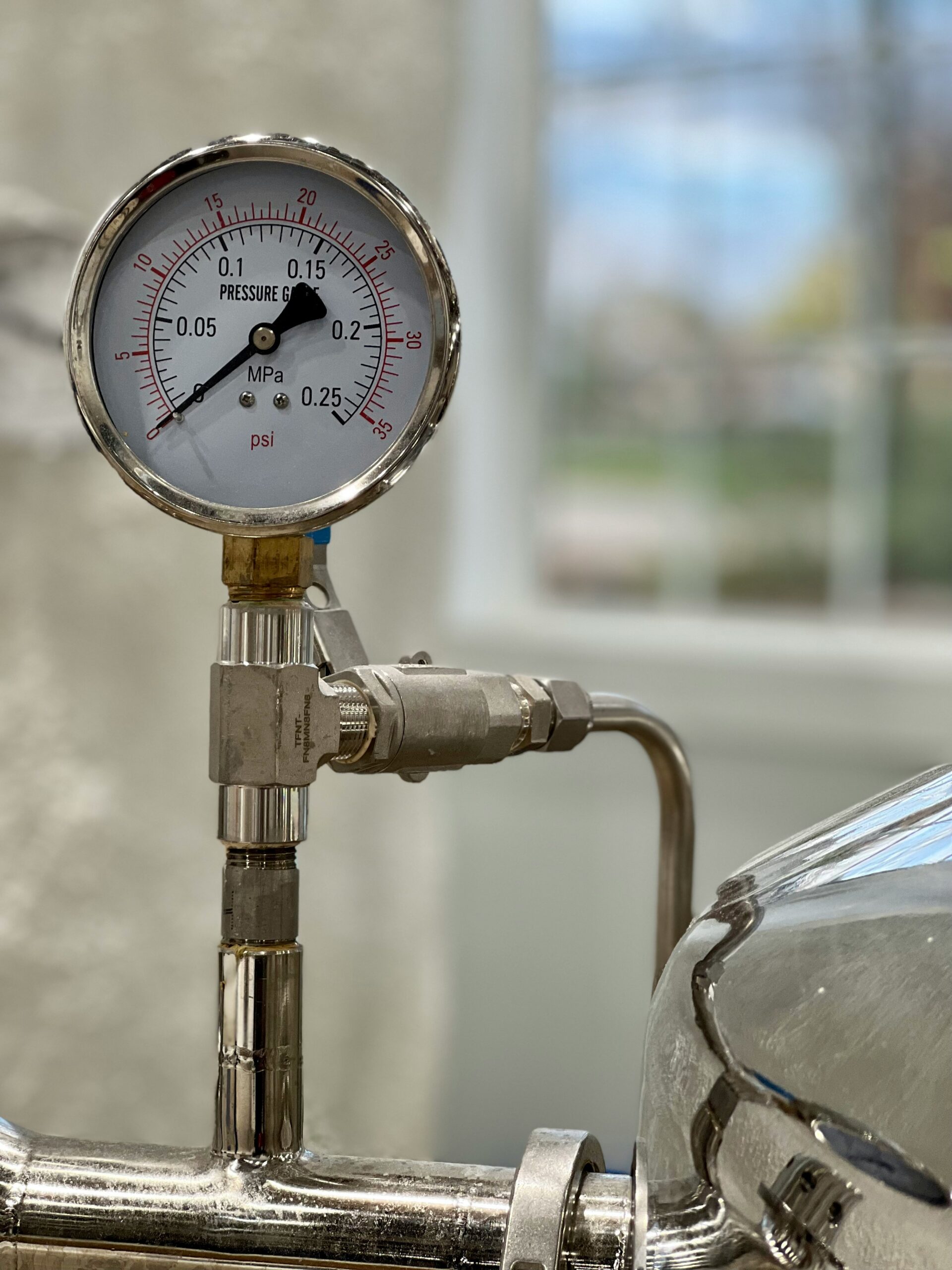
- Most residential hot-water boilers run at roughly 12–15 psi when cold. A reading well below or above your system’s normal range points to a pressure problem.
- Kettling (a rumbling, boiling-kettle sound) usually means scale or sludge on the heat exchanger and needs professional service.
- If you smell gas, leave the house first and call from outside. Don’t troubleshoot.
- If the basic checks don’t bring the heat back, call for boiler repair rather than repeatedly resetting the unit.
Why Is My Boiler Not Turning On?
When a boiler won’t turn on, the cause is usually a thermostat that isn’t calling for heat, a tripped breaker or switched-off service switch, a lockout after a failed ignition, or low system pressure. Work through those four in order before calling, because each takes only a minute or two to check.
Check the thermostat first
- Make sure it’s set to Heat, not Cool or Off.
- Raise the setting a few degrees above the current room temperature.
- Replace the batteries if the screen is blank or dim.
- If you have several zones, check whether the whole house is cold or just one area. One cold zone points to a zone valve, circulator or thermostat on that zone, not the boiler itself.
Check power to the boiler
Most boilers have a service switch that looks like a regular light switch, often at the top of the basement stairs or near the boiler. It’s easy to flip off by mistake. Then check your electrical panel for a tripped breaker. If the breaker trips again right after you reset it, leave it off and call a professional.
Look for a lockout or error code
Modern boilers show an error code or a flashing light when they lock out after failed ignition attempts. Write the code down. Your owner’s manual may allow one reset, but if the boiler locks out again, there’s an underlying problem such as an ignition, flame-sensing or gas-supply issue that needs a technician.
For example, a Randolph homeowner might find the boiler display flashing after a power outage. One reset per the manual is reasonable. A second lockout on the same day is a call, not another reset.
What Should My Boiler Pressure Be?
Most residential hot-water heating systems are filled to about 12–15 psi when the boiler is cold, and pressure rises as the water heats. It generally stays below 25 psi in normal operation, well under the 30 psi at which a typical relief valve opens. Your system’s exact range depends on your home’s height and design, so compare against the manual or the installer’s marking on the gauge.
Boiler pressure low
Low pressure can stop the boiler from firing or leave upstairs radiators and baseboards cold. Common causes include a small leak somewhere in the piping, a recently bled radiator, or a fill valve that isn’t keeping up. If pressure keeps dropping after it’s been topped up, there’s water escaping somewhere, and finding it early prevents bigger damage. Our leak detection service can track it down.
Boiler pressure too high
Pressure that climbs toward 30 psi when the boiler is hot often points to a waterlogged expansion tank or a fill valve letting in too much water. Watch for water dripping from the pressure relief valve’s discharge pipe. Never cap or plug a relief valve. It’s a safety device, and a high reading needs a professional diagnosis.
What Do Strange Boiler Noises Mean?
Some noise is normal: a soft hum from the circulator pump and a click when the burner lights. Rumbling, banging, whistling, gurgling or rattling are different. They usually point to scale buildup, trapped air, a failing pump or loose parts, and each one tells a plumber where to look.
| Sound | Likely cause | What to do |
|---|---|---|
| Rumbling or “boiling kettle” sound (kettling) | Scale or sludge on the heat exchanger causing water to overheat and flash to steam | Schedule service; the heat exchanger may need flushing or descaling |
| Gurgling in pipes or radiators | Trapped air in the system | Bleed radiators if you have bleed valves, then recheck pressure |
| Whistling or high-pitched noise | Restricted flow or pressure issues | Check pressure; call if it continues |
| Grinding or loud humming from the pump | Worn circulator pump bearings | Call for repair before the pump fails |
| Rattling | Loose panels, screws or a vibrating component | Call; don’t remove boiler panels yourself |
Boiler kettling: why it happens and why it matters
Kettling gets its name from the sound of a kettle about to boil. Minerals and sludge build up on the heat exchanger, so water passing over hot spots overheats and forms steam bubbles. Besides the noise, it reduces efficiency and stresses the heat exchanger. It’s common in older systems that have never been flushed, and it’s a job for a professional rather than a DIY fix.
Boiler Troubleshooting Checklist: What You Can Safely Do
Homeowners can safely check settings, power, pressure readings and radiator bleed valves. Anything involving the burner, gas valve, ignition, wiring or opening the boiler cabinet should be left to a licensed professional. Use this checklist before you call, and note what you find to speed up the visit.
- Thermostat on Heat, set above room temperature, fresh batteries.
- Service switch on; breaker not tripped.
- Note any error code or flashing light.
- Read the pressure gauge with the boiler cold and, if it runs, hot.
- Bleed radiators if they’re cold at the top and warm at the bottom.
- Look for water on the floor, under the boiler or at the relief valve pipe.
- Write down what you hear and when it happens.
Regular maintenance prevents many of these problems. Our winter boiler care tips cover what to do before the heating season starts.
When Is a Boiler Problem an Emergency?
Treat it as an emergency if you smell gas, your carbon monoxide alarm sounds, you see water pouring from the boiler, or the house is losing heat fast in freezing weather. In those situations, safety comes first. Get people out if there’s a gas or CO concern, then call for help.
- Gas smell: Leave immediately. Don’t flip switches or use phones inside. Call your gas utility or 911 from outside.
- CO alarm: Get everyone outside and call 911. A yellow or flickering burner flame instead of a steady blue one can be a warning sign of incomplete combustion. The Massachusetts carbon monoxide law requires CO detectors in most residential buildings, so test yours before winter.
- No heat in freezing weather: Pipes can freeze in unheated homes. Call for emergency service.
Frequently Asked Questions
Why is my boiler not working but the pressure is fine?
If pressure is normal, check the thermostat, the service switch and breaker, and the display for an error code. Ignition, flame-sensor or circulator pump problems can also stop heat even with good pressure, and those need a technician.
Can I reset my boiler myself?
Yes, once, following your owner’s manual. If it locks out again, stop resetting it. Repeated resets can hide a real fault and won’t fix it.
Is boiler kettling dangerous?
Kettling isn’t usually an immediate hazard, but it strains the heat exchanger and wastes fuel. Left alone, it can shorten the boiler’s life, so schedule service soon.
Do you offer boiler repair in Randolph?
Yes. Emma Plumbing and Drain Services provides boiler repair in Randolph and throughout Norfolk, Plymouth, Bristol and Middlesex counties, with 24/7 emergency response.
When should I repair my boiler instead of replacing it?
A single failed part on a boiler in good condition is usually worth repairing. If your boiler is older and needing frequent repairs, our boiler replacement team can give you an honest comparison.
Get Your Heat Back With Emma Plumbing and Drain Services
If your boiler is still not working after these checks, our licensed team is ready to help. Emma Plumbing and Drain Services has served homeowners in Randolph, Brockton and across Norfolk, Plymouth, Bristol and Middlesex counties since 2007, under MA Master Plumber License #15828. We offer 24/7 emergency response with upfront pricing, and our boiler repair technicians diagnose the real cause so the fix lasts. Call 857-398-8840 or request a free quote today.