
Summary:
When to Replace Your Boiler vs. Repair It
The decision between boiler repair and replacement isn’t always obvious, but there are clear indicators that point you in the right direction. If repair costs exceed 50% of a new boiler’s price, replacement typically makes more financial sense.
Age plays a critical role too. Most boilers have a lifespan of about 15 years, and once yours approaches this mark, frequent breakdowns become more likely. If you’ve needed repairs three times in the last year, your boiler is probably reaching the end of its useful life.
The key is looking beyond the immediate repair cost to the bigger picture of efficiency, reliability, and long-term expenses.
Signs Your Boston Home Needs a New Boiler
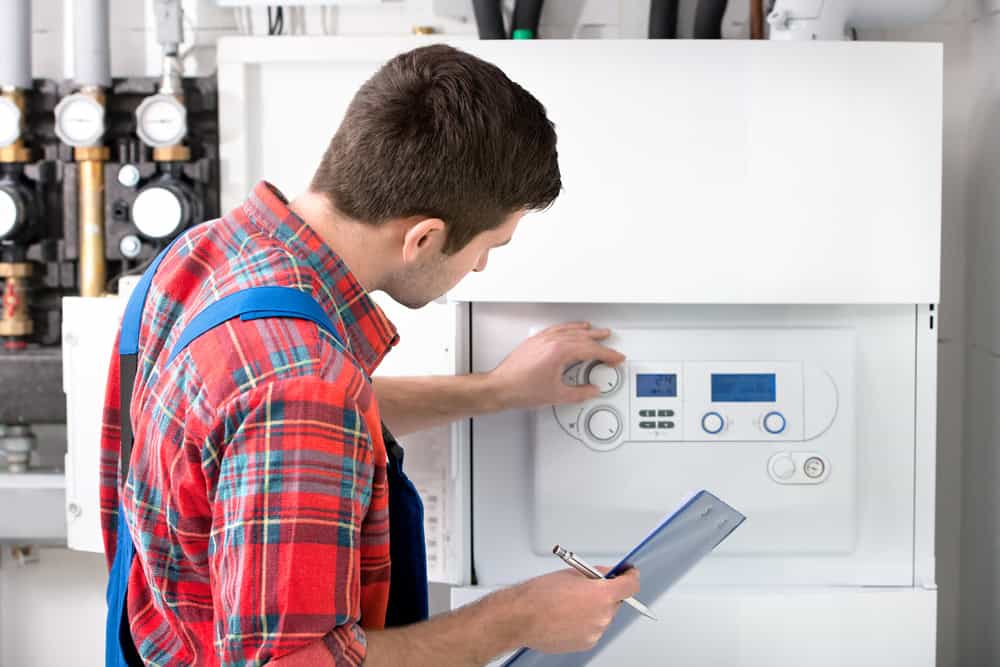
Boston homeowners deal with some of the harshest winter conditions in the country, which means your boiler works overtime for months. With average winter temperatures often below 20°F and rising energy costs, an inefficient heating system becomes a major financial burden.
Here are the warning signs that indicate it’s time for a replacement rather than another repair. Gurgling and whistling sounds often indicate air in the system, inefficient operation, or insufficient water levels. While these issues can sometimes be repaired, they’re often symptoms of larger problems in aging systems.
Banging, clanking, or whistling sounds typically signal air in the system, low water pressure, or failing internal components. When these noises become frequent, you’re usually looking at multiple component failures that make replacement more economical.
Energy efficiency is another major factor. Old burners in the Boston area operate at only 60% efficiency on average, while new boilers offer 85% efficiency ratings. This efficiency difference can be dramatic enough that a new system pays for itself through energy savings.
If your boiler takes significantly longer than normal to heat your house, circulation issues are likely at play. Combined with an aging system, this usually indicates that multiple components are failing simultaneously.
Safety concerns should never be ignored. Old, deteriorating boilers can present safety risks such as gas leaks or carbon monoxide emissions. If your system has a history of safety issues, replacement becomes the responsible choice for your family’s wellbeing.
Understanding Boiler Installation Costs in Boston
Boiler installation costs in Boston average $4,339, with prices ranging from $2,454 to $6,723 depending on boiler type, fuel type, and house size. Understanding these costs helps you make an informed decision about repair versus replacement.
The type of fuel you choose significantly impacts both installation and ongoing costs. The most common fuels in Boston are natural gas, propane, and oil, and your fuel choice affects both ongoing costs and the boiler price. Installation typically adds $1,000 to $3,000 and requires new exhaust lines, drains, and fuel lines.
However, the upfront cost is only part of the equation. A Boston boiler replacement that reduces gas consumption by 20 percent could save about five to 10 cents per square foot annually. For many homeowners, these energy savings make the investment worthwhile even before considering the reliability benefits.
Modern boiler technology offers significant advantages over older systems. High-efficiency models from manufacturers like Navien and Lochinvar heat both small and large homes with much less energy usage. New equipment can be up to four times more efficient than units installed decades ago, meaning more heat output with less fuel consumption.
It’s also worth considering the hidden costs of keeping an old system running. One repair often leads to another, and before you know it, you’re facing a full replacement anyway. The cost of constant maintenance and repairs can mount up over time, particularly for older boilers.
Professional installation ensures you get the full benefit of your investment. In Boston, you need a permit to replace your boiler, and proper installation by qualified professionals ensures code compliance and optimal performance.
The Boiler Installation Process in Massachusetts
Professional boiler installation involves much more than simply connecting a new unit. Installation must conform to manufacturer’s instructions and Massachusetts building codes. Massachusetts requires all professionals who service, install, or repair oil-burning equipment to have a valid Oil Burner Technician Certificate.
The process starts with a thorough assessment of your home’s heating needs, existing infrastructure, and any necessary modifications. Proper sizing is critical – an oversized or undersized boiler will operate inefficiently and may have a shortened lifespan.
We handle permits, removal of the old system, any necessary piping modifications, and thorough testing to ensure everything operates safely and efficiently.
Permits and Code Requirements for Boston Boiler Installation

Massachusetts has specific requirements for boiler installation that protect both homeowners and communities. Massachusetts code allows local jurisdictions to be more strict than state code, but not less strict. Any work involving potable water or fuel requires permitting that can only be obtained by people within the given trade.
Understanding these requirements helps ensure your installation is done correctly the first time. Non-residential boilers and pressure vessels need permits from the Massachusetts Boiler and Pressure Vessel Inspection Program and must be inspected before use. While residential installations have different requirements, professional installation ensures all codes are met.
Proper clearances must be maintained around boilers to permit inspection, servicing, repair, and replacement. Passageways around all sides of boilers must have an unobstructed width of at least 18 inches. These requirements aren’t just bureaucratic – they ensure safe operation and maintenance access.
The installation process also involves safety considerations that go beyond basic hookup. Boilers must be equipped with pressure-relief valves set at the maximum rating of the boiler. Steam and hot water boilers must be protected with low-water cutoff controls.
We understand these requirements and ensure your system meets all safety and efficiency standards. It’s smart to hire a NATE-certified contractor when replacing a boiler, as this certification ensures your contractor stays current with industry knowledge and has proven field experience.
Working with qualified professionals also protects your investment. The manufacturer’s rating data, nameplate, and operating instructions must be attached to the boiler, and all controls must be set, adjusted, and tested by the installer. Proper installation documentation and setup ensure warranty coverage and optimal performance.
Maximizing Energy Efficiency and Rebate Opportunities
While Massachusetts ended Mass Save rebates for fossil fuel equipment in August 2024, understanding energy efficiency still plays a crucial role in your boiler decision. Modern boilers are far more energy-efficient than older models due to technology advances and stricter energy regulations.
The efficiency difference can be substantial. Energy efficiency in boilers ranges from around 80 percent for standard conventional boilers to percentages in the 90s for energy-efficient condensing units. Condensing boilers maintain comfortable temperatures while using less fuel by cooling exhaust gases and extracting their thermal energy.
For many Boston homeowners, switching to a high-efficiency gas boiler is the most cost-effective upgrade, especially since many homes already have hydronic or steam-based systems that integrate easily with modern gas boilers. High-efficiency gas boilers can last up to 20+ years when properly maintained.
Even without rebates, the energy savings can be significant. A new boiler may be significantly more energy efficient, and you may save money in the long run by installing a more efficient system. A more efficient boiler can heat rooms more quickly and do a better job keeping you warm through winter months.
The investment in efficiency pays dividends beyond just energy savings. Replacing a boiler can increase your home value in Boston, and pairing it with updated air conditioning to revamp your entire HVAC system could boost your home’s value by 5% to 7%.
Regular maintenance ensures you get the full efficiency benefit from your new system. Modern units require annual servicing to ensure optimal performance, safety compliance, proper combustion, and clean heat exchangers. This maintenance helps your system operate at peak efficiency throughout its lifespan.
Making the Right Choice for Your Boston Home
Deciding between boiler repair and replacement comes down to age, efficiency, safety, and long-term costs. If you have a serious or recurring problem with your boiler and the system is close to the 15-year mark, it’s probably time to replace it.
The harsh reality of Boston winters means you can’t afford to gamble with an unreliable heating system. Boiler breakdowns tend to occur at the worst possible time – the middle of heating season on the coldest night. Professional installation ensures your family stays warm and safe throughout the winter.
When you’re ready to explore your options, we bring transparent pricing, professional expertise, and the reliability you need for Boston’s demanding climate.